
How to Choose the Right Supported Work Task
When families begin thinking about supported work or meaningful participation at home, it is easy to start with the task.
Could they make something? Could they help package something? Could they fold, sort, stack, wipe, carry, press, count, or organize?
Those are helpful questions, but they are not the first question.
The better starting point is the person.
At Carter & Crew Creative, we are learning to build work around Carter’s strengths, interests, energy, support needs, and dignity. That means we do not choose a task just because it looks productive from the outside.
We choose a task by asking whether it can become meaningful, manageable, and respectful with the right support.
Start With What Already Works
Before introducing something new, pay attention to what already feels familiar.
- What does the person tolerate well?
- What do they return to?
- What textures, motions, sounds, or routines are manageable?
- What environments seem calmer?
- What time of day tends to work best?
The goal is not to find the most impressive task. The goal is to find a starting point that respects the person.
Look for a Real Purpose
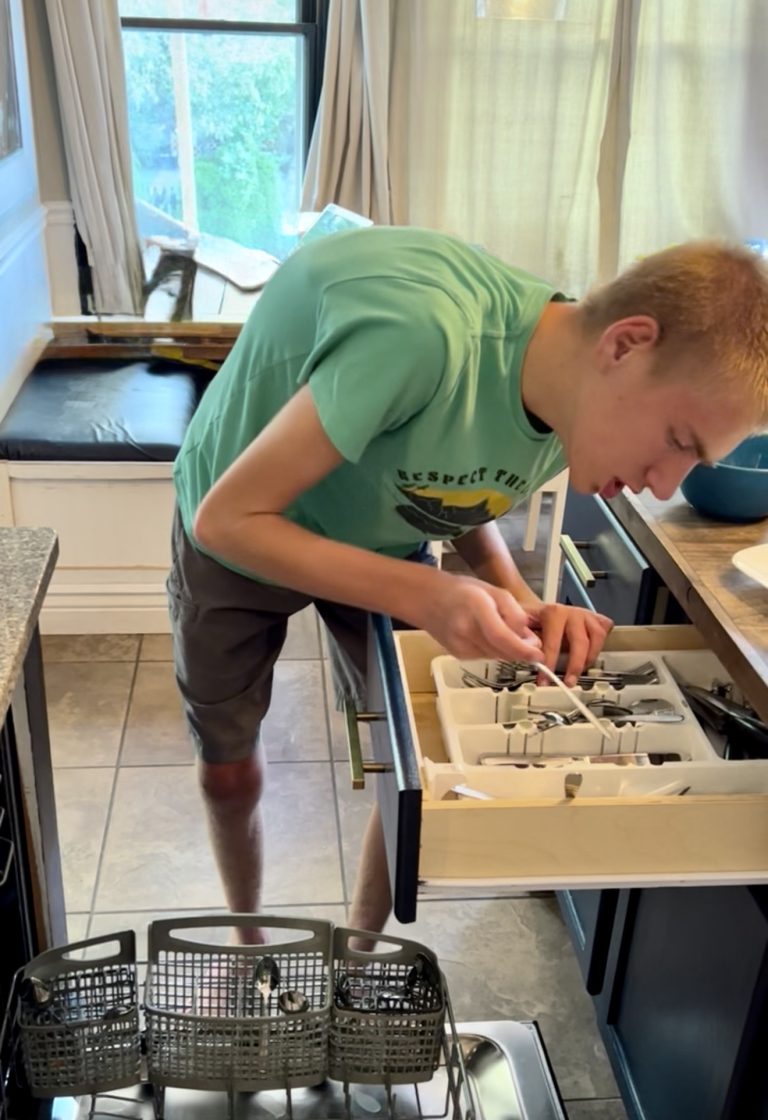
A meaningful task should connect to something real. That might be a household routine, family project, small-business process, volunteer effort, hobby, or daily-life responsibility.
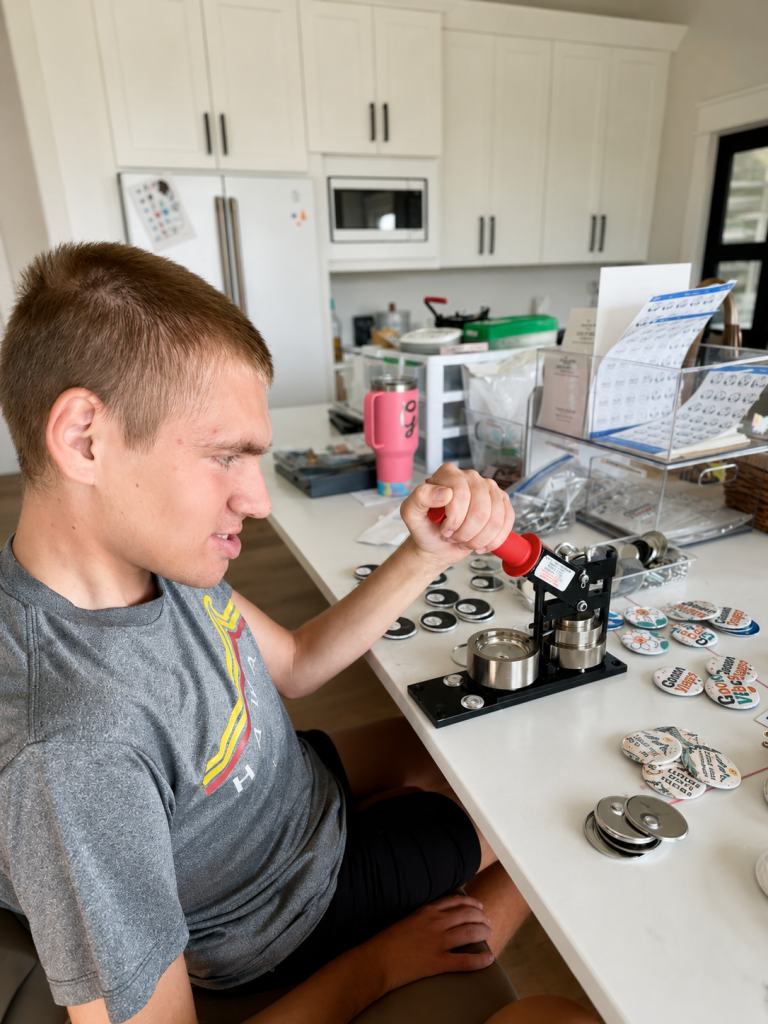
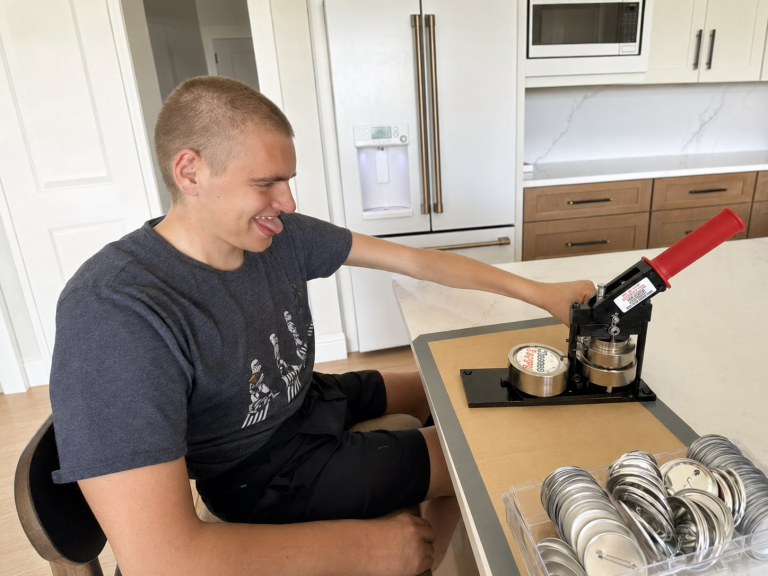
Putting stickers on packaging, restocking supplies, sorting products, wiping a tray, or placing items into bags can all be meaningful when they are part of a real process.
Small does not mean fake. Simple does not mean unimportant.
Break the Task Into Pieces
A task that seems too big may still have one step that works.
Instead of asking, “Can they do this whole job?” ask, “Which part of this process could they participate in?”
Packaging an order, for example, may include choosing the product, matching it to the order, placing it in a sleeve, adding a thank-you card, applying a sticker, placing it in a mailer, and moving it to the finished pile.
One person may participate in one step. Another may do several. Participation still counts.
Pay Attention to the Support Needed
The right task is not always the one that needs the least support. Sometimes the right task is the one where support makes participation possible without creating stress or frustration.
Support might include a visual checklist, fewer items at one time, a sorting tray, a clear beginning and ending, repeated setup, modeling, hand-under-hand support, a quieter space, shorter sessions, breaks, or adaptive tools.
Support should protect dignity. It should not turn the task into a performance or a test.
Watch for Signs the Task Is Too Much
A task may be a good idea and still not be a good fit today.
Turning away, pushing materials away, increased frustration, fatigue, loss of interest, changes in regulation, or needing much more prompting than usual are all useful information.
They do not mean failure. They may mean the task needs to be shorter, simpler, quieter, more supported, or saved for another day.
Choose Repeatable Over Impressive
Repeatable tasks are powerful. They can become familiar, be practiced, be adapted, and become part of a rhythm.
That is one reason small-batch products work for Carter & Crew Shop. The steps are simple enough to repeat, but still connected to a real product and purpose.
A Simple Task-Choosing Filter
Before choosing a task, ask:
- Is it real?
- Is it safe?
- Is it respectful?
- Can it be broken into steps?
- Can it be supported?
- Can it be repeated?
- Is there a clear stopping point?
- Does it fit the person, not just the goal?
If the answer is mostly yes, it may be worth trying.
Start small. Watch carefully. Adjust often.
That is how meaningful participation begins—not with a perfect plan, but with one respectful opportunity.